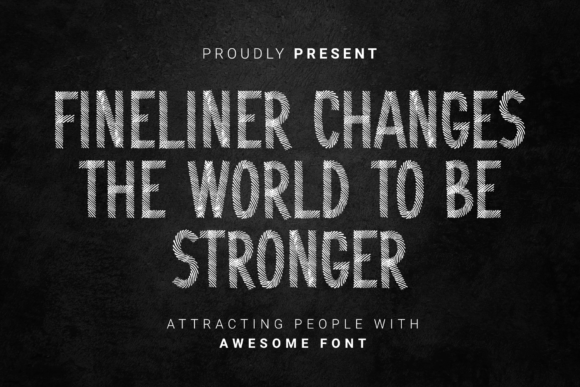
Fineliner Changes the World: A Display Font That Elevates Small Business Branding
Refreshing a Café Menu with a Clean, Confident Typeface
I recently helped a local café owner update their menu design. The original layout felt cluttered and inconsistent, making it hard for customers to scan offerings quickly. We decided to overhaul the typography to create a more inviting and professional look. That’s when I introduced Fineliner Changes the World—a display font that immediately caught the client’s eye. Its clean, structured lines and modern personality gave the menu a fresh, elevated feel without sacrificing readability.
Fineliner Changes the World is a minimalist yet expressive display font. Its sharp lines and balanced spacing make it ideal for short, impactful text like menu headings, brand names, and packaging titles. It’s not designed for long paragraphs, but rather for grabbing attention in a clean, contemporary way.
How Typography Shapes Brand Perception
Typography is more than just choosing a pretty font. It plays a crucial role in how customers perceive your business. A well-chosen typeface can make your brand feel more trustworthy, cohesive, and professional. When I showed the café owner a preview of the new menu using Fineliner Changes the World, they immediately noticed how much more polished and intentional the design felt.
This font works especially well for small businesses looking to create a strong visual identity. Whether it’s printed on a menu, stamped on a coffee bag, or featured on a social media post, Fineliner Changes the World brings clarity and style. It helps brands stand out in a crowded market without overwhelming the viewer.
Real-World Uses for Fineliner Changes the World
I’ve used this font across a variety of branding materials, and it consistently delivers great results:
- Logo Design: Its clean structure makes it perfect for minimalist logos that need to be both readable and distinctive.
- Product Labels: From candle jars to skincare bottles, the font adds a touch of modern elegance without sacrificing legibility.
- Packaging Design: Whether it’s a bakery box or a boutique tag, Fineliner Changes the World gives packaging a premium, cohesive look.
- Social Media Graphics: Its strong visual presence works well on Instagram stories, banners, and promotional posts.
- Business Cards & Thank-You Notes: The font adds a refined, personal touch to printed materials that help reinforce brand recognition.
Pairing Fineliner Changes the World with Supporting Fonts
One of the best ways to maximize the impact of a display font like Fineliner Changes the World is to pair it with a complementary typeface. For the café menu, I paired it with a clean sans serif font for body text. This created a strong visual hierarchy—Fineliner for headings and the sans serif for descriptions and pricing.
Here are a few effective pairing ideas:
- Sans Serif: For modern, minimal brands, a clean sans serif like Montserrat or Open Sans provides great contrast and readability.
- Serif: For more traditional or elegant brands, a serif font like Playfair Display or Georgia adds depth and sophistication.
- Script or Handwritten Font: For a more personal or boutique feel, a light script font can add warmth and creativity when used sparingly.
Readability Tips for Real-World Applications
While Fineliner Changes the World is highly legible at larger sizes, it’s important to consider where and how it will be used:
- Small Labels: Avoid using it at very small sizes. Stick to headlines or short phrases on packaging and tags.
- Mobile Screens: Always test how the font appears on phone screens—especially for banners or digital ads.
- Printed Packaging: Ensure there’s enough contrast between the font and background color to maintain clarity.
- Social Media Thumbnails: Use it for short, bold text overlays that stand out in fast-scrolling feeds.
What to Check Before Using Fineliner Changes the World
Before downloading and using any font for commercial purposes, it’s important to verify the licensing terms. Fineliner Changes the World is a commercial font, which means it typically requires a license for use in branding, packaging, merchandise, and client work.
Also, check what font styles and file formats are included:
- Does it include uppercase and lowercase letters?
- Are there alternates or ligatures for stylistic variation?
- Is it available in multiple weights (bold, light, etc.)?
- Does it support multiple languages and special characters?
Having access to these options gives you more flexibility in design and ensures your branding looks consistent across different platforms and languages.